Affiliate disclosure: sew.net earns a commission on purchases made through links on this page. This does not affect our recommendations. We only recommend products we would suggest to a friend.
Best Sewing Machine for Beginners in 2026
Picking a first sewing machine should not be this hard. There are dozens of models across a $100–$400 price range, all promising to be “perfect for beginners,” and most sewing forums will give you five different answers if you ask five different people.
This guide cuts through that. We’ve mapped the landscape of beginner-appropriate machines, assessed them against what actually matters to someone learning to sew, and landed on clear recommendations you can act on.
What beginners actually need (and what they don’t)
Before the picks, a short framework: because knowing what matters will help you spend money in the right place.
What you need:
- Drop-in bobbin: Front-loading bobbins work fine once you know what you’re doing. For a beginner, the drop-in top-loading design makes rethreading far less frustrating.
- Automatic needle threader: Threading a needle by hand every time you change thread is a small annoyance that grows into a real friction point. This feature costs almost nothing at the machine level and saves significant aggravation.
- Adjustable speed control: A speed slider (separate from foot pedal pressure) lets you sew slowly with confidence. Without it, fabric can run away from new sewists before they’ve learned to control it.
- Consistent tension: The most common beginner complaint isn’t “I need more stitches,” it’s “my thread is bunching underneath.” A machine with reliable factory tension settings, minimal user adjustment required, removes a major source of confusion.
- Clear threading diagram: Machines that print the threading path on the machine itself, not just in the manual, speed up the first few weeks significantly.
What you don’t need at this stage:
- 200+ built-in stitches. You’ll use 5–10 in year one. Extra stitches are not a problem, but they’re not worth paying a premium for.
- An embroidery hoop or built-in embroidery. Embroidery is its own discipline. Add it later when you know you want it.
- A dual-feed or walking foot built in. These are useful for quilting; buy a snap-on walking foot separately if you need it.
Our top picks
Best overall: Brother CS7000X
The CS7000X is the machine we’d recommend to most beginners in 2026. It has 70 built-in stitches, a drop-in bobbin, an upgraded automatic needle threader (meaningfully better than the one on the older CS6000i), a detachable wide table for quilting projects, and a speed control slider. It weighs 10.5 pounds, making it easy to move between rooms or take to a class.
The machine can handle cotton, linen, light denim, and most fabric weights a beginner will encounter. It includes 10 presser feet out of the box: more than enough to get started with zippers, buttonholes, and blind hems without buying anything extra.
Specs: 70 stitches | 750 SPM max | 7mm max stitch width | 10.5 lbs | 10 included feet
Best for: Complete beginners who want room to grow. Works well for garment sewing, home dec, and light quilting.
Avoid if: You primarily sew heavy canvas, denim, or upholstery fabric. The CS7000X handles medium-weight denim but is not a heavy-duty machine.
Best mechanical option: Janome 2212
If you want a machine that will run for 20 years with minimal maintenance and no software to learn, the Janome 2212 is the choice. It’s a fully mechanical machine with 12 built-in stitches, manual tension control, and a durable metal frame. There’s no LCD display and no computerized anything: just straightforward, reliable sewing.
The 2212 tops out at 860 stitches per minute, runs quietly, and handles repairs, alterations, and basic garment construction with no drama. The 25-year mechanical warranty reflects genuine confidence in the build.
The trade-off is real: 12 stitches is limiting, and you’ll need to thread manually (no automatic threader). But for someone who wants to learn fundamentals on a machine that won’t develop electronic glitches, this is the better tool.
Specs: 12 stitches | 860 SPM max | 5mm max stitch width | 14 lbs | 4-step buttonhole
Best for: Beginners who want a “buy it once” machine and plan to focus on basic construction (alterations, simple garments, home repairs).
Avoid if: You want to experiment with decorative stitches or expect to tackle quilting projects.
Best budget pick: Brother CS7000i
The CS7000i is the direct successor to the long-running CS6000i. It keeps the same accessible price point while fixing the CS6000i’s needle threader issue and adding 10 more stitches and the 1/4-inch piecing foot quilters need. At $179–$219, it’s the strongest value in this category for beginners who want computerized convenience without paying CS7000X prices.
Specs: 70 stitches | 850 SPM max | 7mm max stitch width | 13 lbs | 10 included feet
Best for: Budget-conscious beginners who want the full 70-stitch library and quilting capability.
Avoid if: You plan to work with heavy fabrics regularly.
Best for kids: Brother XM2701
The XM2701 is a simpler, lighter machine designed for younger sewists (ages 8 and up with supervision). It has 27 built-in stitches, a drop-in bobbin, automatic needle threader, and a basic stitch selector dial. At under 10 pounds, it’s genuinely manageable for a child or teenager.
It doesn’t have a speed control slider, which is worth noting: beginners typically benefit from one. But the machine’s mechanical simplicity makes it easier to understand, and at its price point, it’s appropriate as an introductory machine for kids who may outgrow it in a year or two.
Specs: 27 stitches | Drop-in bobbin | Automatic needle threader | Under 10 lbs
Best for: Young beginners ages 8–14. Gift purchases.
How we evaluated these machines
These recommendations are based on:
- Published specification data from Brother and Janome
- Amazon review analysis (volume and sentiment patterns across verified purchases)
- Structured comparisons from independent review publications including TechGearLab and Sewing.com
- Alignment with what skill-level research shows new sewists actually struggle with
We did not accept free product samples from manufacturers. We did not receive payment to feature any model.
Common beginner questions
Can I learn on a mechanical machine, or do I need computerized?
Both work. Mechanical machines have fewer failure points and are easier to service. Computerized machines automate several tedious tasks (threading, tension, stitch selection) that slow down learning. The Janome 2212 and Brother CS7000X represent both ends: choose based on whether you want simplicity or convenience.
Should I buy a cheap machine now and upgrade later?
We don’t recommend machines under $100 for beginners. At that price point, tension is often inconsistent, parts quality drops, and the frustration of fighting a bad machine undermines learning. Spend $150–$250, get a machine that actually works, and you’ll learn faster and enjoy it more.
What’s the warranty situation?
Brother and Janome both offer 25-year limited warranties on mechanical components. Read the fine print: labor coverage is typically 1–2 years, and most warranties require registration.
What thread should I buy?
Start with 100% polyester all-purpose thread (Coats & Clark or Gutermann are widely available and reliable). Avoid cheap bargain-brand thread: it breaks more frequently and causes tension issues that beginners tend to blame on the machine.
Related guides
- Best sewing machine for quilting →
- Serger vs. sewing machine: do you need both? →
- Brother CS7000i vs CS7000X: which to buy →
- Take the quiz: which sewing machine is right for you? →
Featured products
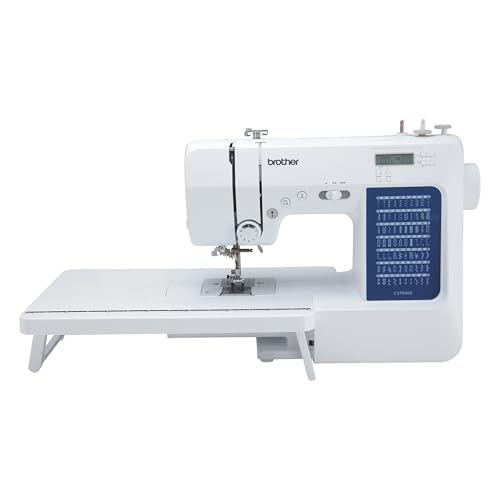
Brother CS7000X Computerized Sewing and Quilting Machine, 70 Built-in Stitches, LCD Display, Wide Table, 10 Included Feet, White
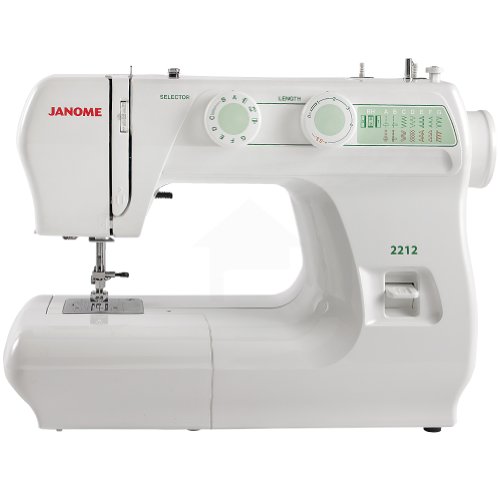
Janome 2212 Front-Loading Sewing Machine with 12 Built-In Stitches


Brother Sewing Machine, XM2701, Lightweight Machine with 27 Stitches, 6 Included Sewing Feet
Last updated: 2026-05-20