Affiliate disclosure: sew.net earns a commission on purchases made through links on this page. This does not affect our recommendations. We only recommend products we would suggest to a friend.
Best Serger in 2026
A serger (also called an overlocker) does three things simultaneously that a standard sewing machine cannot: it trims the seam allowance, wraps the edge with interlocking thread loops, and sews a seam: all in one pass. The result is the neat, stretch-capable, professionally finished seam you see inside ready-to-wear clothing.
This guide covers the best sergers in 2026 across beginner, mid-range, and advanced tiers, with specific picks for garment makers and knit fabric sewists.
Serger basics: what to know before buying
Thread count. Home sergers run with 3 or 4 threads. A 4-thread overlock creates a balanced stitch that’s appropriate for most seams. A 3-thread overlock produces a lighter stitch useful for lightweight fabrics and rolled hems. Some machines offer 2-thread options for the lightest applications. Machines advertised as “3/4 thread” switch between configurations.
Differential feed. This is the most important feature for knit sewists. Two sets of feed dogs (front and rear) that can move at different rates allow the machine to stretch the fabric as it sews (preventing wavy seams) or ease it (preventing stretched-out seams). Without differential feed, knit fabric seams often come out wavy. All modern sergers above the entry level include this.
Threading complexity. Sergers are famously more complex to thread than sewing machines: four threads through a specific path of guides, tension discs, and loopers. Color-coded threading paths (printed on the machine body or on the thread guides) reduce errors significantly. Many beginners thread incorrectly initially; this is normal and the threading path becomes routine quickly.
Rolled hem capability. Most 3/4-thread sergers can switch to a rolled hem stitch for narrow, professional-looking hems on lightweight fabric. This requires a settings change and sometimes a plate change, depending on the machine.
Our top picks
Best for beginners: Brother 1034D
The Brother 1034D is consistently the top-selling entry serger on Amazon, and the recommendation is deserved. At approximately $199, it offers 3/4-thread capability, differential feed, up to 1,300 stitches per minute, and color-coded threading. The lay-in threading path is easier to follow than most sergers at this price point.
The machine handles the standard range of fabrics a beginner will encounter: cotton, knit jersey, lightweight denim, linen: without issue. The stitch quality is solid for the price. The included accessories cover standard applications: blind hem foot, gathering foot, and standard foot.
The main limitation is that the 1034D lacks a built-in rolled hem plate (you’ll need to purchase separately for some rolled hem work) and doesn’t have a cover stitch capability. For beginner use, neither of these matters.
Specs: 3/4-thread | Differential feed | 1,300 SPM | Color-coded threading | 13.88 lbs
Best for: Beginners adding a serger for the first time. Those who sew knit garments or want professional seam finishing.
Best mid-range: JUKI MO-654DE
The JUKI MO-654DE is the standard upgrade recommendation from the Brother 1034D and represents a meaningful step in stitch quality and build refinement. At approximately $380, it offers 2/3/4-thread capability (the 2-thread option adds versatility for flatlock stitches and lightweight applications), differential feed with a 0.7 to 2.0 ratio range, and JUKI’s color-coded lower looper threading system that disengages and snaps into place for easier rethreading.
JUKI’s industrial sewing heritage shows in the stitch consistency. The MO-654DE produces more uniform stitch tension across a wider range of fabrics than the 1034D, and it handles heavier fabrics (multiple layers of knit, thick sweatshirt fleece) more reliably.
The 5-year warranty on machine performance (1 year labor) reflects genuine confidence in build quality. This is a machine built to last a decade or more with normal home use.
Specs: 2/3/4-thread | Differential feed (0.7–2.0 ratio) | Color-coded threading | 15.5 lbs | 5-year warranty
Best for: Sewists who have outgrown the 1034D, who sew primarily knit garments, or who want professional-grade stitch consistency.
Best for advanced sewists: Brother 3234DT (Coverstitch + Serger)
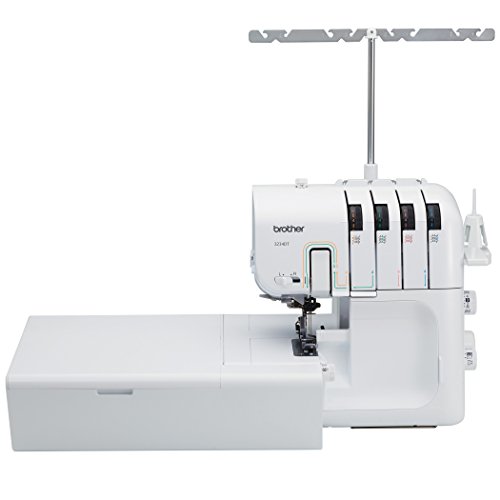
The Brother 3234DT combines serger and coverstitch functions in one machine. A coverstitch creates the stretchy, two-needle topstitch you see on the hemlines of T-shirts and activewear: something a standard serger cannot do. Having both in one machine is a genuine convenience for sewists who finish a lot of knit garments.
The 3234DT handles 3/4-thread overlocking, a chain stitch, and coverstitch in a single machine. Switching between functions requires a configuration change (not instant), but eliminates the need to own two separate machines.
Best for: Advanced sewists producing knit garments regularly who want serger and coverstitch capability without owning two machines.
Serger vs. sewing machine: do you need both?
Yes: if you’re sewing garments or working with knit fabrics regularly. A serger cannot replace a sewing machine: it doesn’t install zippers, sew buttonholes, sew straight construction seams for structured garments, or do any decorative topstitching work. The two machines are complementary, not competitive.
For a complete guide to what a serger does and doesn’t do, see our serger vs sewing machine comparison →.
Frequently asked questions
Is threading a serger as hard as everyone says?
Initially, yes. The threading path is more complex than a sewing machine and the lower looper especially confuses most beginners. With practice: and color-coded guides: most people can rethread reliably within a week of regular use. Using a serger threading tool helps.
Can I sew woven fabrics on a serger?
Yes. A serger works on all fabric types. For woven fabrics, the serger handles seam finishing (preventing fraying) rather than seam construction: you still sew the main seam on your sewing machine, then run the seam allowance through the serger to overlock the edges.
What thread does a serger use?
Sergers use thread cones: larger thread spools designed for higher volume. Standard sewing machine thread (on smaller spools) works but runs out faster. Wooly nylon thread is popular for the loopers when sewing activewear because it adds coverage and stretch to the stitch.
Can I serge leather?
No. Serger knives will damage leather, and the thread type and tension required for leather are incompatible with serger operation. Sergers are for fabric.
Related guides
- Best serger for beginners →
- Best serger for knit fabric →
- Serger vs sewing machine: do you need both? →
- Brother 1034D review →
- JUKI MO-654DE review →
- Take the quiz: which sewing machine is right for you? →
Featured products


Last updated: 2026-05-20