Affiliate disclosure: sew.net earns a commission on purchases made through links on this page. This does not affect our recommendations. We only recommend products we would suggest to a friend.
Best Embroidery Machine in 2026
Embroidery machines are a distinct category from standard sewing machines. They’re designed to stitch pre-programmed or user-imported designs automatically onto fabric, using a hooping system that moves the fabric while the needle stays fixed. The result is precisely replicated embroidery that would take hours by hand.
This guide covers the best embroidery machines available on Amazon in 2026, from the established beginner standard to mid-range options for more ambitious projects.
What to look for in an embroidery machine
Hoop area. The embroidery hoop defines the maximum size of design you can stitch without repositioning. A 4” x 4” hoop is standard entry-level; a 5” x 7” hoop handles larger designs, names, and decorative motifs without requiring repositioning. If you plan to embroider large jacket backs or home dec items, look for 6” x 10” or larger.
Built-in design library. Embroidery machines come pre-loaded with designs. More built-in designs mean more out-of-box capability without importing files. However, design quantity matters less than design quality: look for reviews that assess the quality and usefulness of the built-in library.
USB import capability. The ability to load designs via USB from your computer opens up the entire online embroidery design ecosystem (free and paid designs are widely available in .PES, .DST, and other formats). This feature is near-universal in current machines but worth confirming.
Color change management. Complex multi-color designs require stopping the machine at each color change to swap thread. Some machines guide this process automatically with clear prompts; others leave you tracking it manually. A machine with clear color-change management dramatically reduces errors on complex designs.
Machine type: embroidery-only vs combination. Embroidery-only machines do one thing well. Combination sewing/embroidery machines (like the Brother SE series) add standard sewing capability. Combination machines are more versatile but are generally larger and more expensive. For dedicated embroiderers, an embroidery-only machine typically offers better value per embroidery dollar.
Our top picks
Best overall: Brother PE800
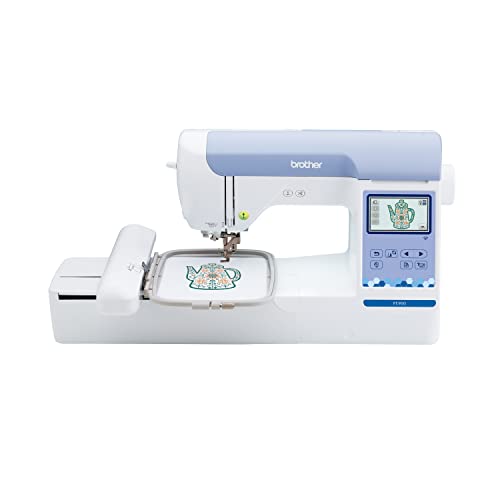
The Brother PE800 is the best-selling embroidery machine on Amazon and the standard recommendation for beginners in 2026. It’s an embroidery-only machine with a 5” x 7” embroidery area: larger than the entry-level 4” x 4” standard: which means fewer design repositioning interruptions and access to a wider range of design files.
The PE800 ships with 138 built-in designs, 11 font styles (7 English, 3 Japanese, 1 Cyrillic), and a large 3.2-inch LCD color touchscreen. The touchscreen makes design selection and positioning straightforward. The USB port allows importing custom and purchased designs.
Maximum embroidery speed is 650 stitches per minute. The automatic needle threader reduces setup friction between color changes. The 25-year limited warranty applies to mechanical components.
At the $550–$650 price point for the base machine, the PE800 represents strong value against the 5” x 7” hoop area, which you’d typically pay more for in competing brands.
Specs: 138 built-in designs | 11 font styles | 5” x 7” hoop area | 3.2” LCD touchscreen | USB import | 650 SPM | 25-year limited warranty
Best for: Beginners and hobbyists who want to embroider clothing, home dec, gifts, and accessories. The 5” x 7” hoop area provides meaningful room to grow.
Avoid if: You need combination sewing capabilities or plan to produce very large embroidery designs (6” x 10”+).
Best budget option: Brother SE600 (Combination)
For sewists who want embroidery capability without a dedicated embroidery-only machine, the Brother SE600 combines standard sewing functions with a 4” x 4” embroidery hoop. It offers 80 built-in designs and 103 sewing stitches alongside standard sewing features.
The hoop area is smaller than the PE800, limiting design size, but the combination functionality means one machine serves both purposes. For occasional embroiderers who also sew regularly, this trade-off can make sense.
Best for: Sewists who want embroidery as a secondary capability alongside standard sewing. Budget-conscious buyers.
Best mid-range: Brother PE900
The PE900 is the step-up from the PE800, offering a larger 6” x 10” embroidery field, 193 built-in designs, and a 5-inch LCD touchscreen. The larger hoop area opens up full back designs, large home dec pieces, and more complex multi-element compositions.
The expanded design count and screen size improve workflow for higher-volume embroiderers. At a higher price point than the PE800, it’s appropriate for hobbyists who already know they want the larger design field.
Best for: Embroiderers who have outgrown 5” x 7” or who know from the start that they need larger hoop capability.
Embroidery design file formats: what you need to know
Machine embroidery uses proprietary file formats. Brother machines primarily use .PES format. Before purchasing designs online or importing custom files, confirm that your machine reads the format the files are available in. Key formats by brand:
- Brother: .PES
- Janome: .JEF
- Singer: .XXX
- PFAFF: .VIP
- Husqvarna/Viking: .HUS, .VIP
Software tools (Inkscape plugins, Embrilliance) can convert between formats. For Brother PE800 users, .PES files are widely available from free and commercial embroidery design sites.
Stabilizers: the most important thing beginners forget
Embroidery on fabric requires a stabilizer: a backing material that prevents the fabric from distorting as thousands of needle penetrations create the design. Without proper stabilization, designs pucker, shift, or distort.
- Cut-away stabilizer: Permanent backing, cut around the design after embroidery. Use for stretchy knits and fabrics that need ongoing support.
- Tear-away stabilizer: Temporary backing, torn away after embroidery. Use for stable woven fabrics (cotton, linen, denim).
- Water-soluble stabilizer (topping): Dissolved in water after embroidery. Use over textured fabrics (terry cloth, fleece) to prevent the design from sinking into the pile.
Factor stabilizer into your budget when calculating embroidery costs. It’s a consumable.
Related guides
- Best sewing machine for beginners →
- Brother PE800 review →
- Take the quiz: which machine is right for you? →
Featured products


Last updated: 2026-05-20